Solar panels for homes, companies and communities: save on your bill

Legalisation and grants included
We handle all paperwork: municipal licences, legalisation with the electricity distributor and management of current grants (income tax, FOTOPAR, CAE, IBI property tax).
In-house engineering and installers
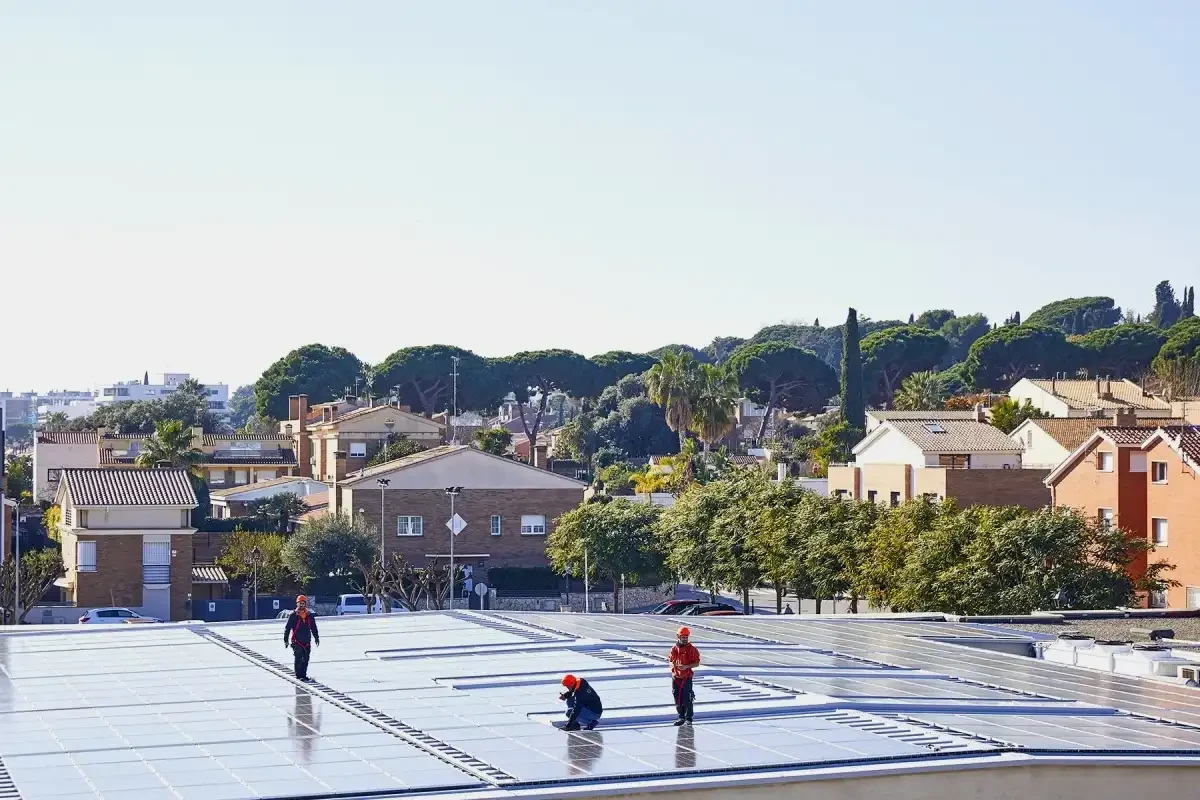
We design and install with our own team, no subcontracting. We control every phase and resolve any incidents directly.
Comprehensive warranty up to 30 years
Up to 30 years on SunPower Performance panels, 10 years on inverters. Plus 5-year installation warranty and 2-year production guarantee.
Save up to 70% on your bill
Drastically reduce your electricity cost from day one. We size every installation to maximise self-consumption and accelerate payback: 5-7 years for residential and 3-5 years for industrial.
How we work on your solar panel installation
We take care of every phase of the project, from the initial study to post-commissioning follow-up:
1. Technical study and consumption analysis
We analyse your electricity bills, consumption curve, roof orientation, shading and available space to size the optimal solution according to your profile (home, business or community).
2. Solution design
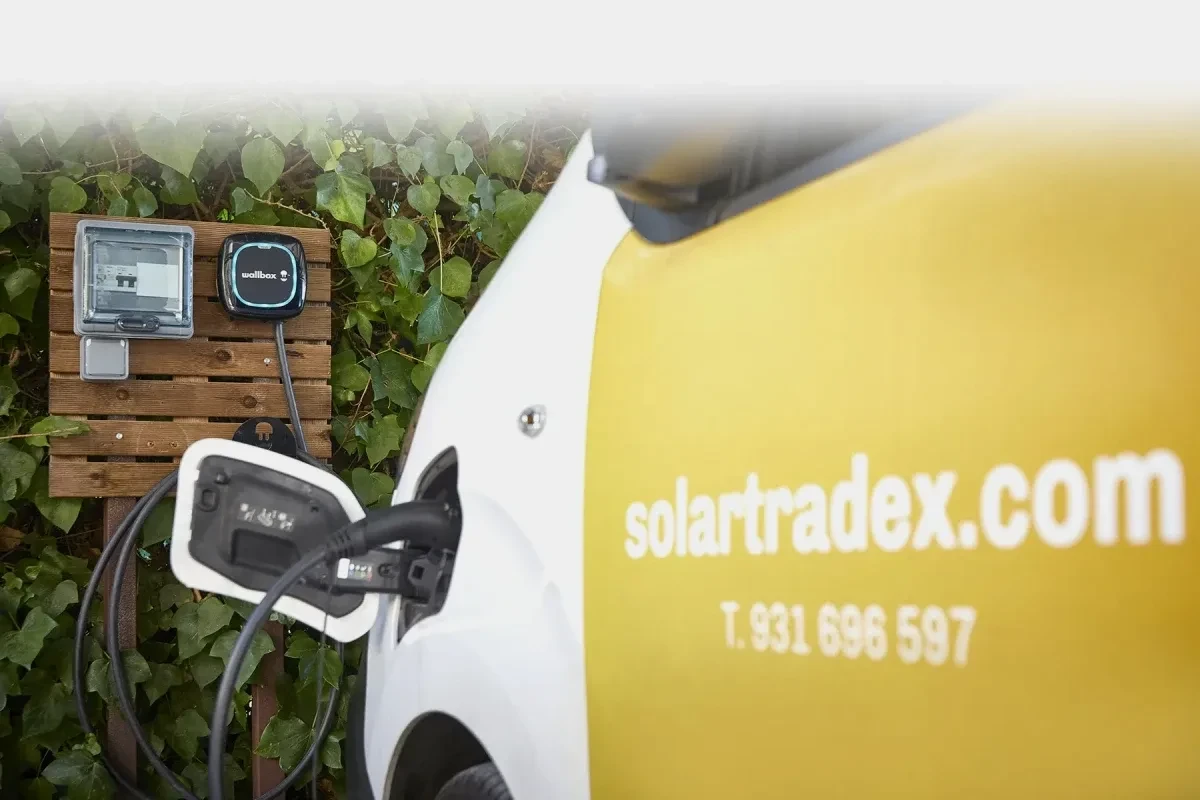
Our engineering team designs the installation tailored to your needs: power, panel type, monitoring system and possible integrations with heat pumps, batteries or electric vehicle chargers.
3. Proposal and quote
We prepare a detailed proposal with estimated production, annual savings, required investment, payback period and applicable tax incentives.
4. Professional installation
We execute with our own team of installers, without subcontracting. We coordinate the work to minimise impact and guarantee quality at every stage.
5. Legalisation and commissioning
We handle municipal permits, legalisation with the distribution company, activation of excess energy compensation and management of current grants and reductions.
6. Follow-up and support
Monitoring system to track production and consumption from your phone, with automatic incident detection and technical support throughout the installation's lifespan.
Featured solar self-consumption projects
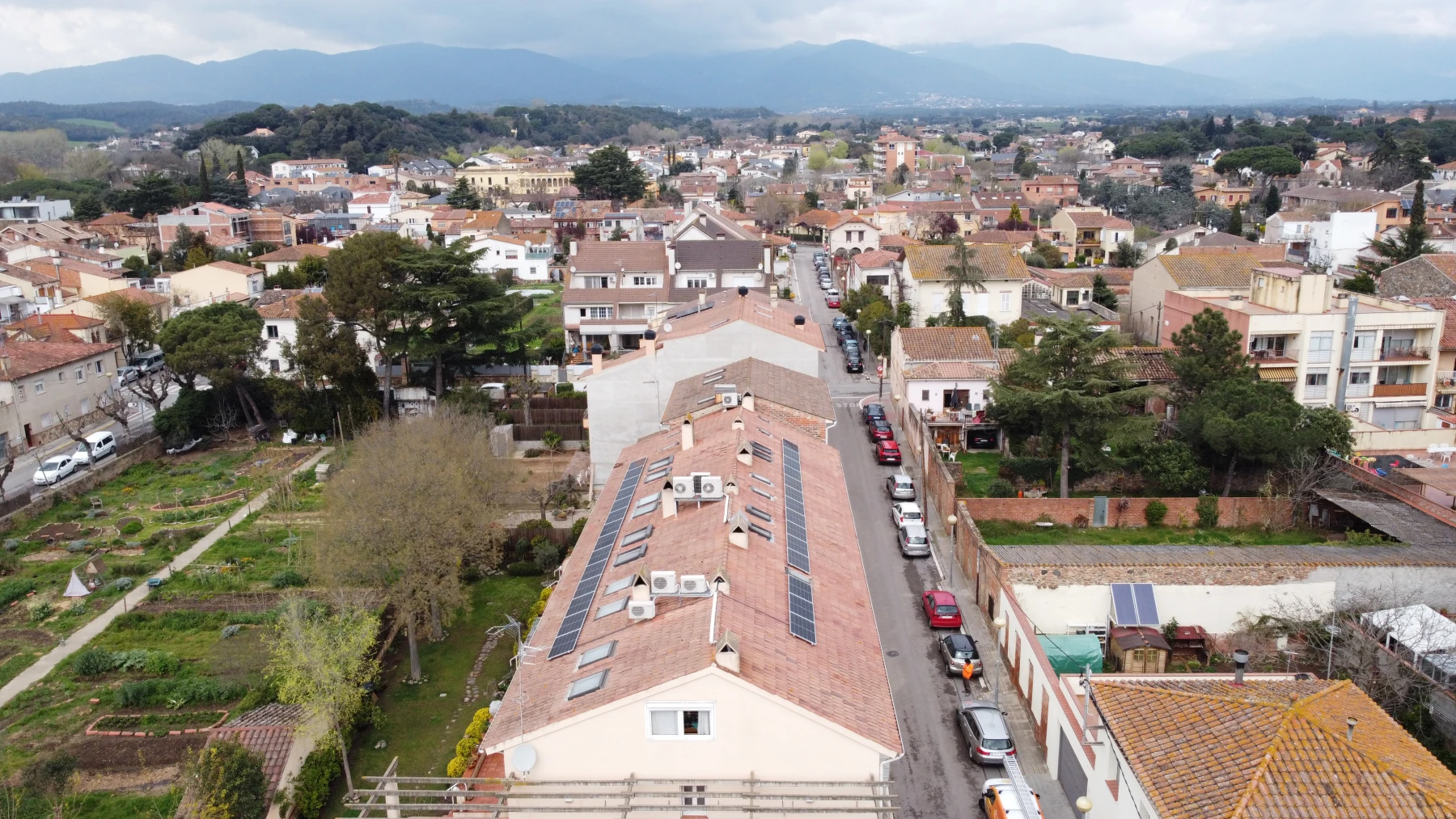
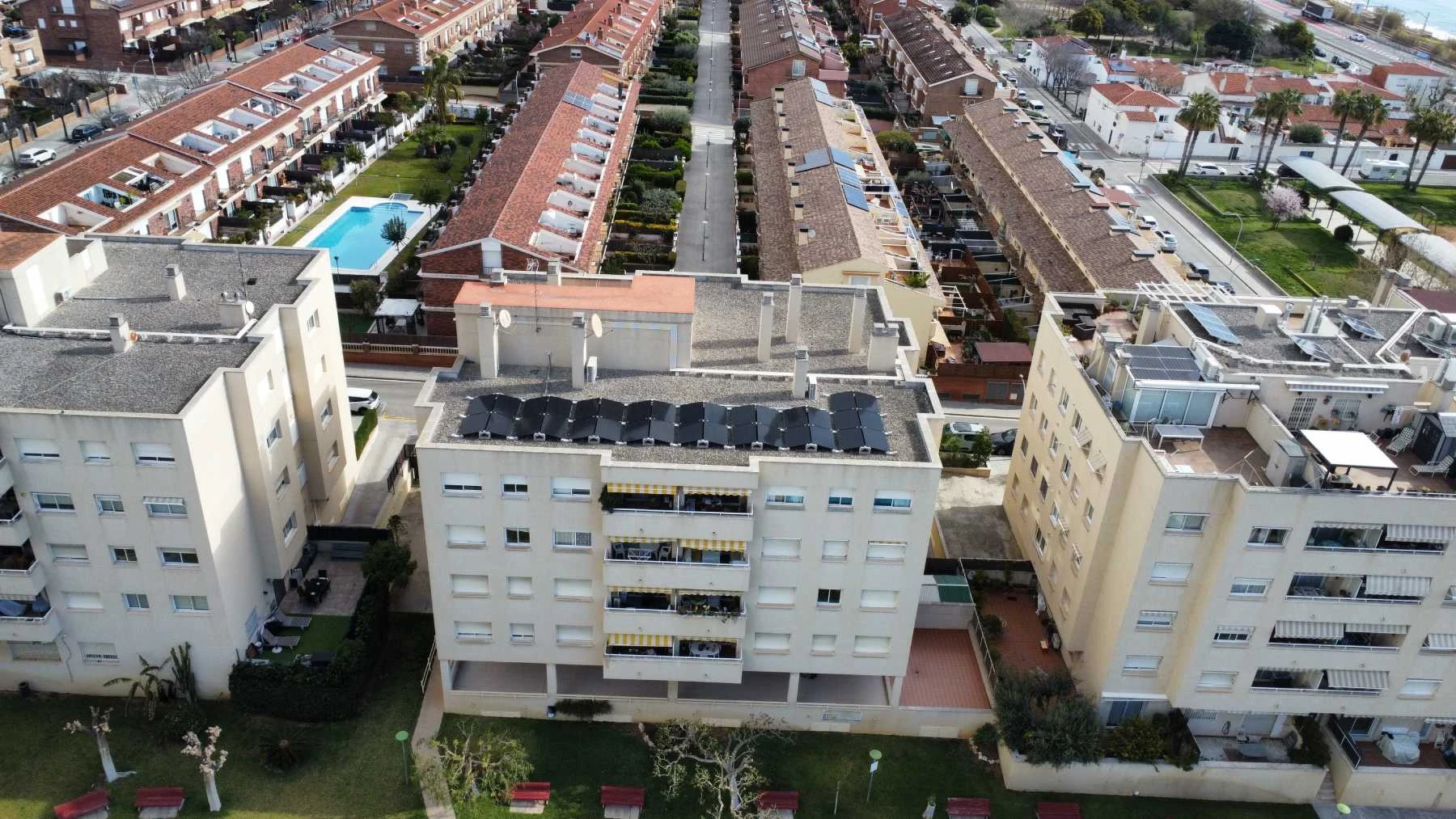
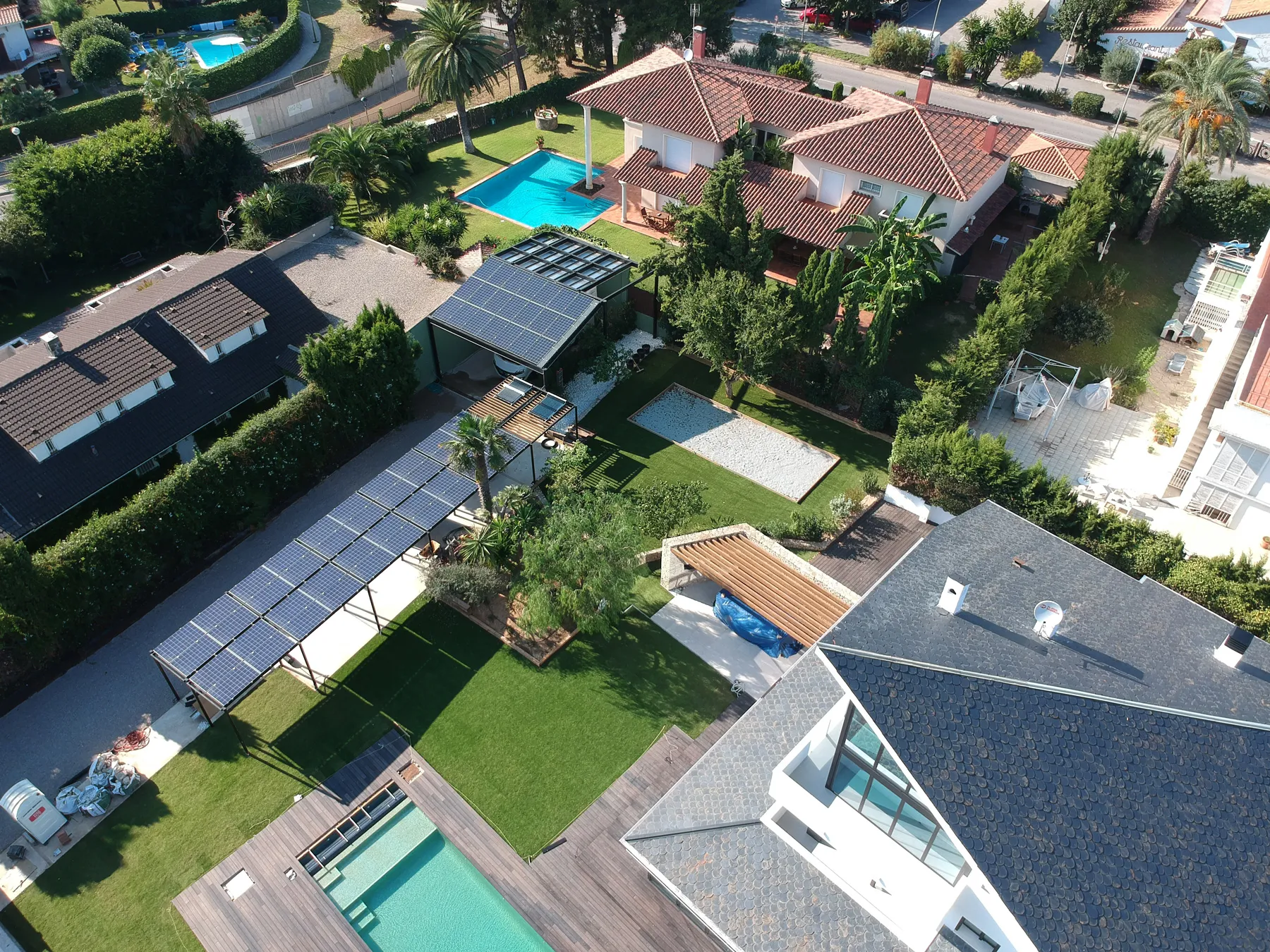
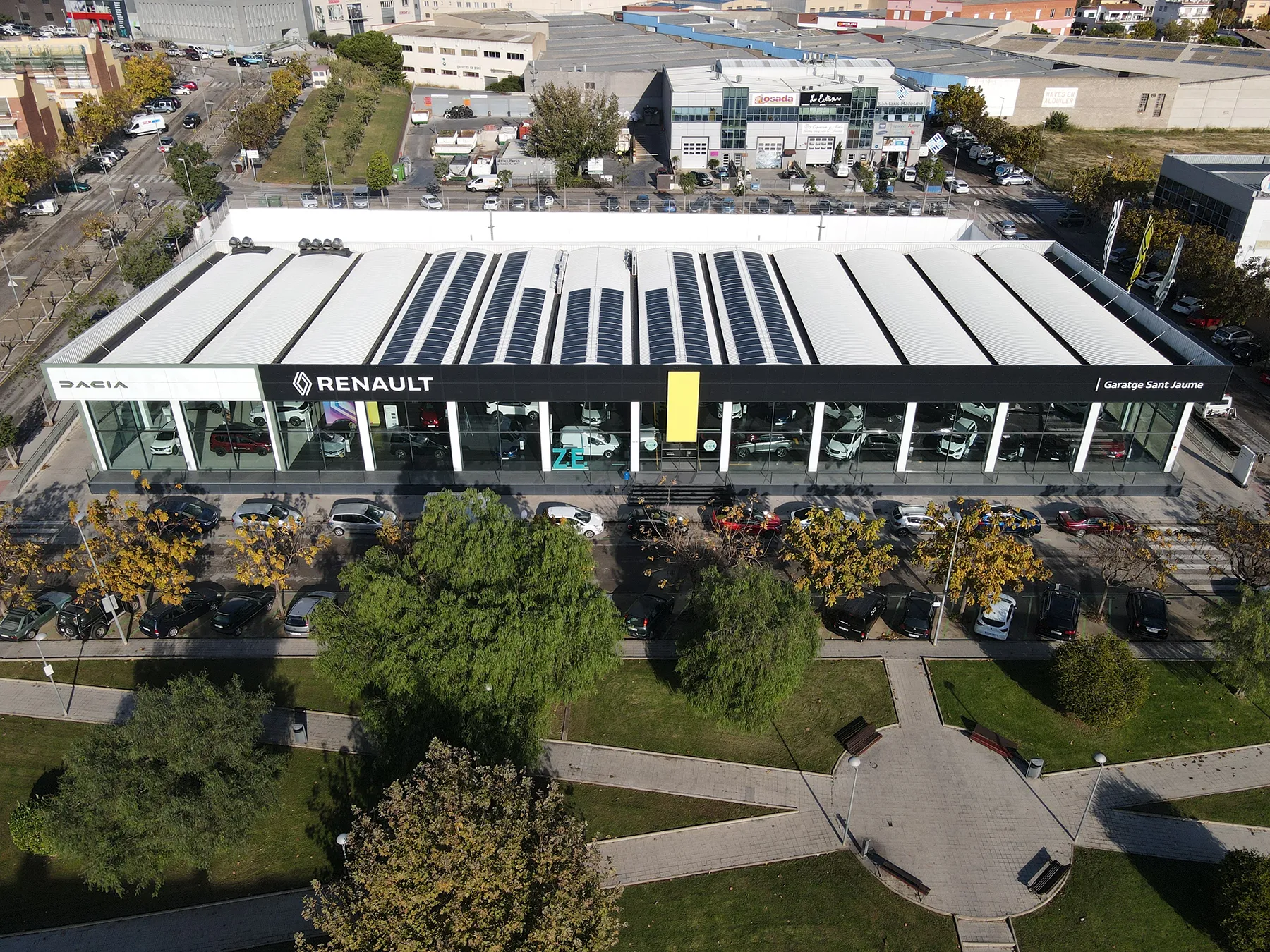
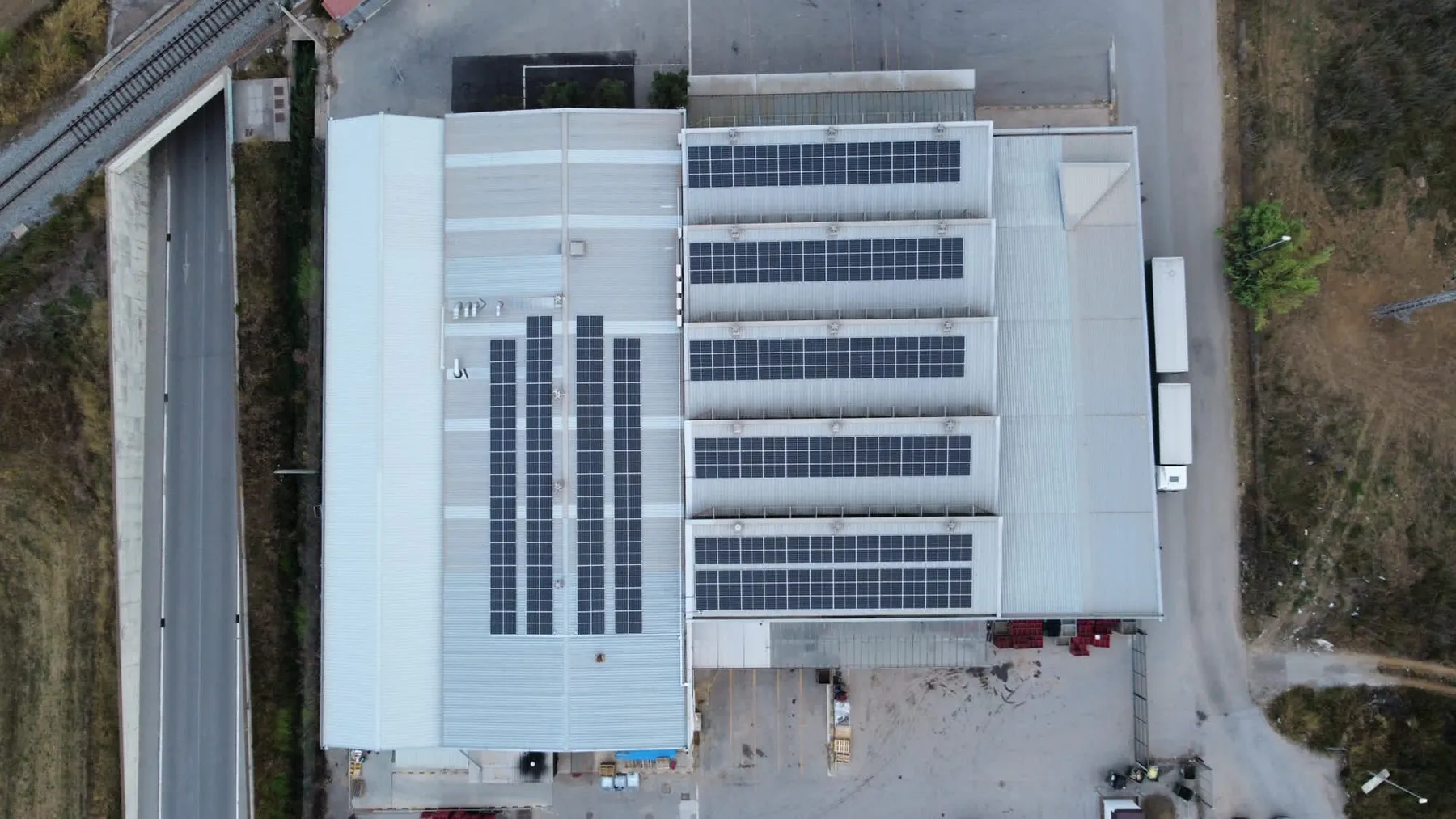
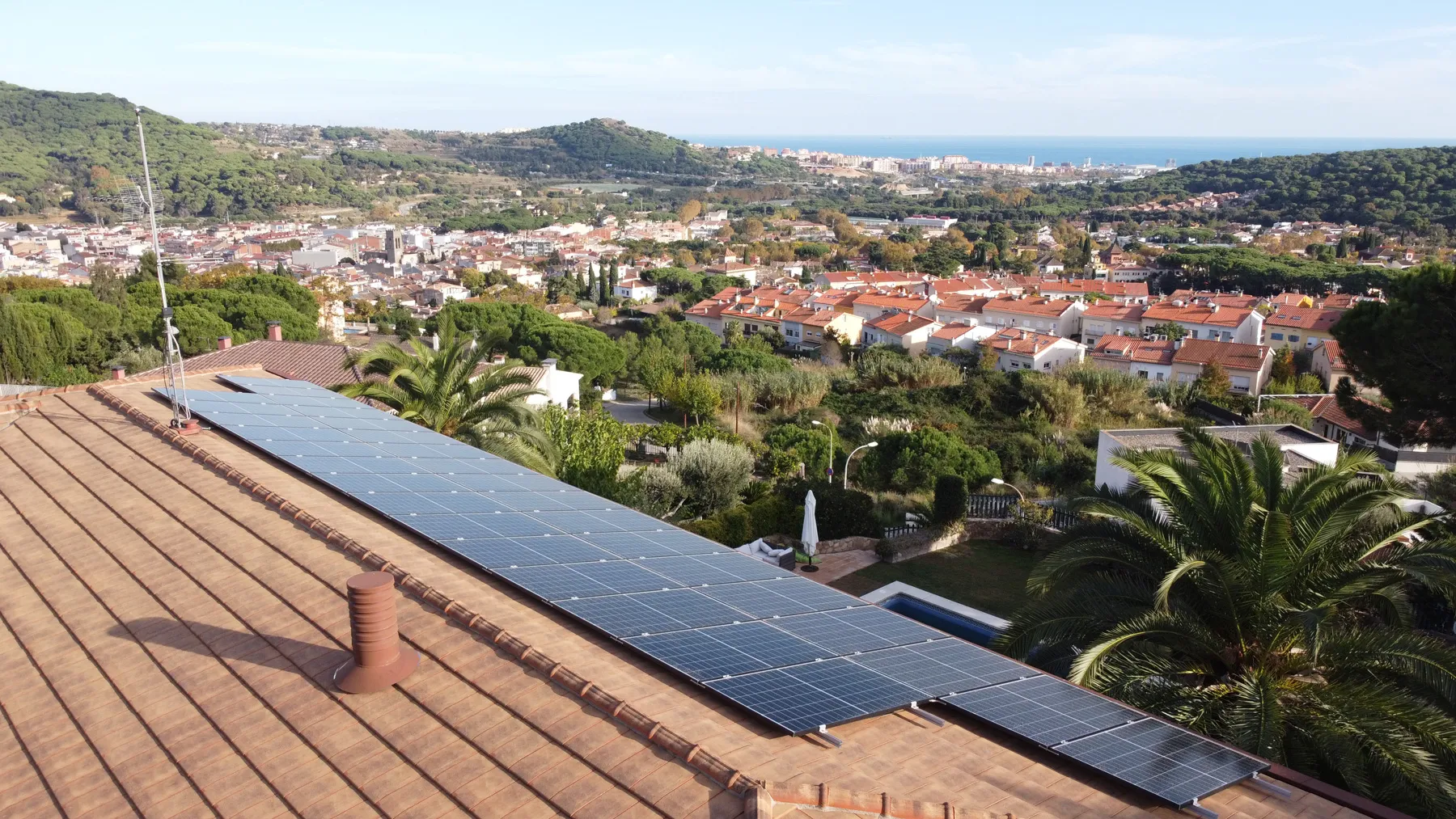
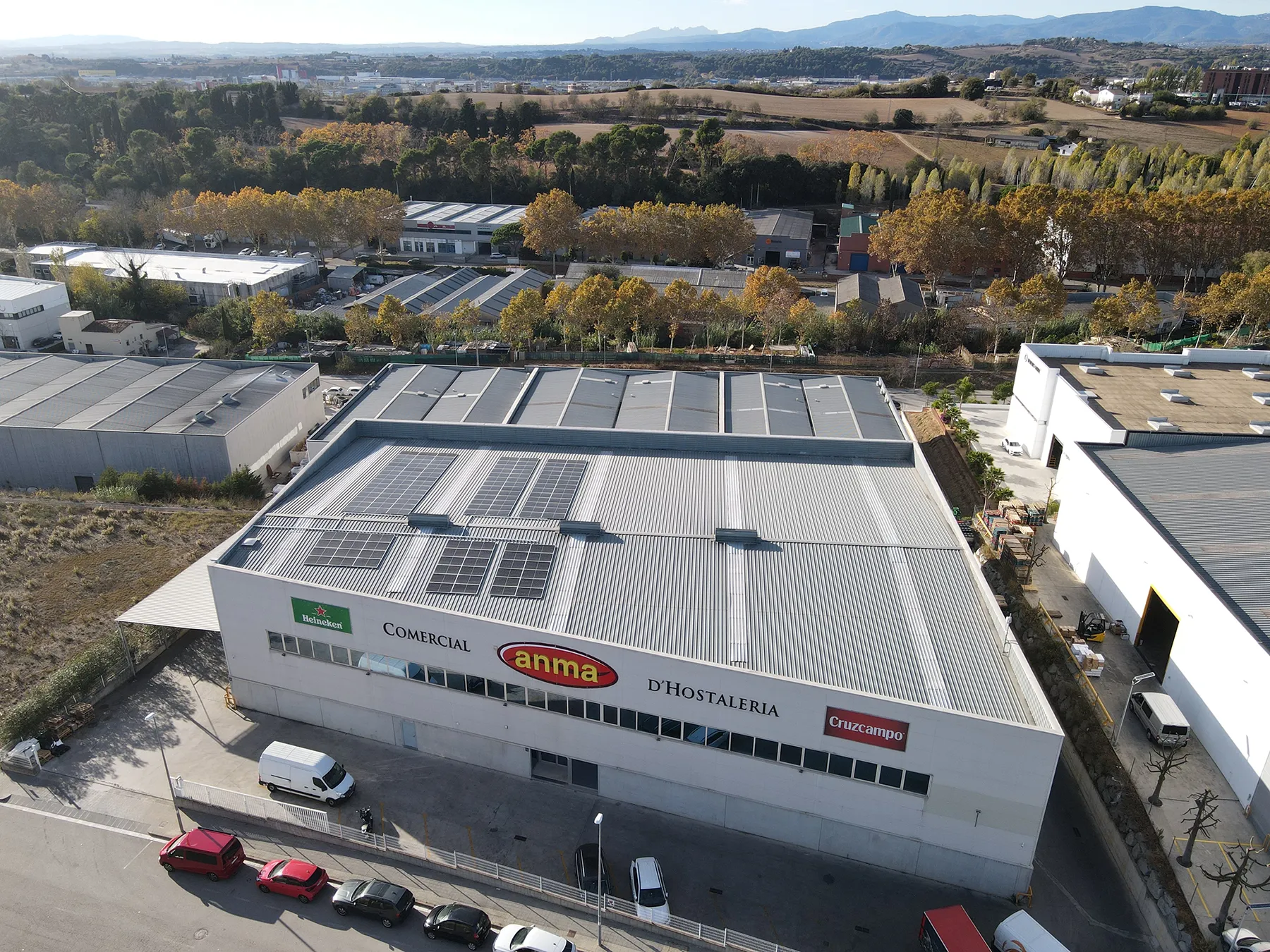
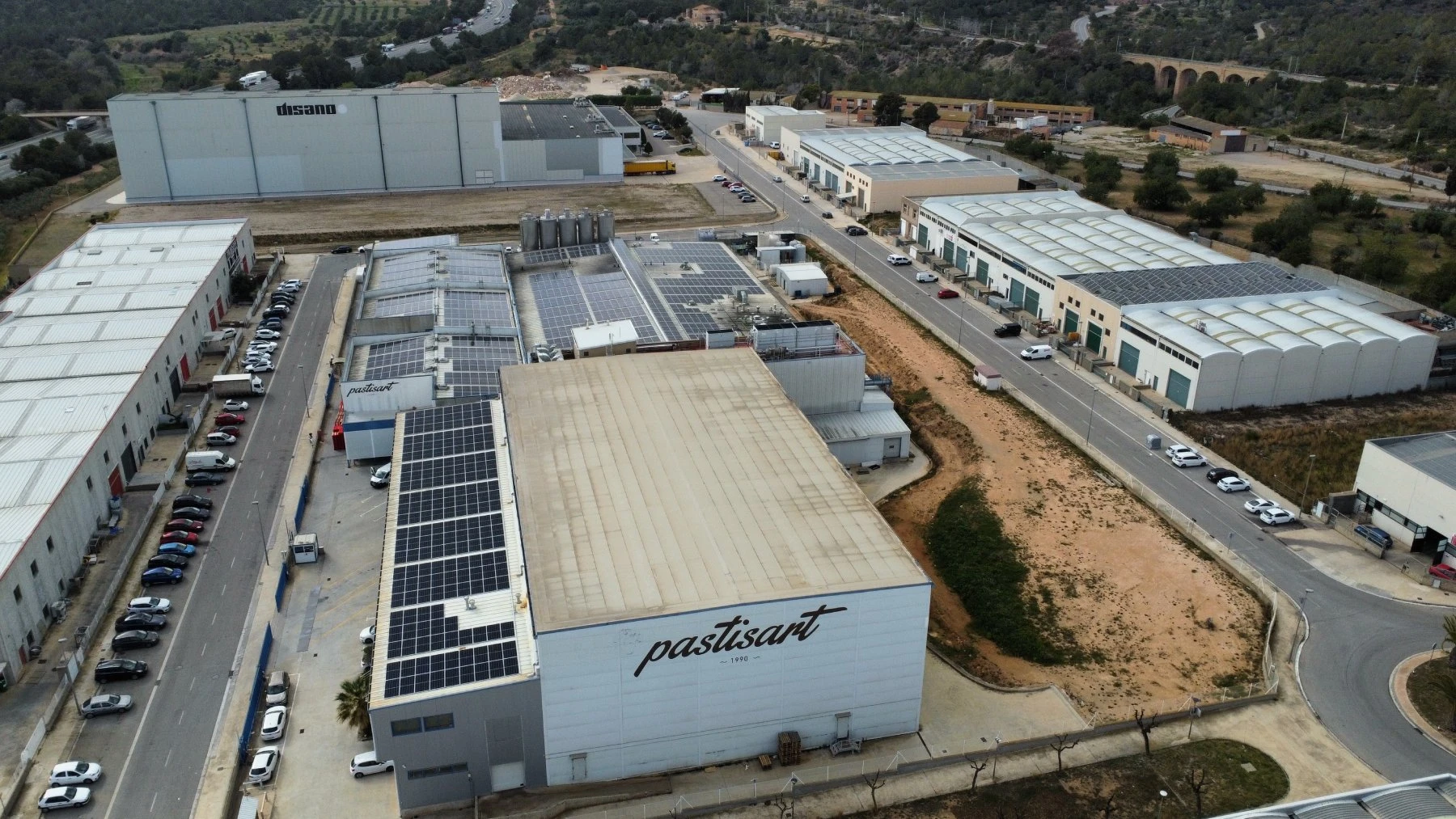
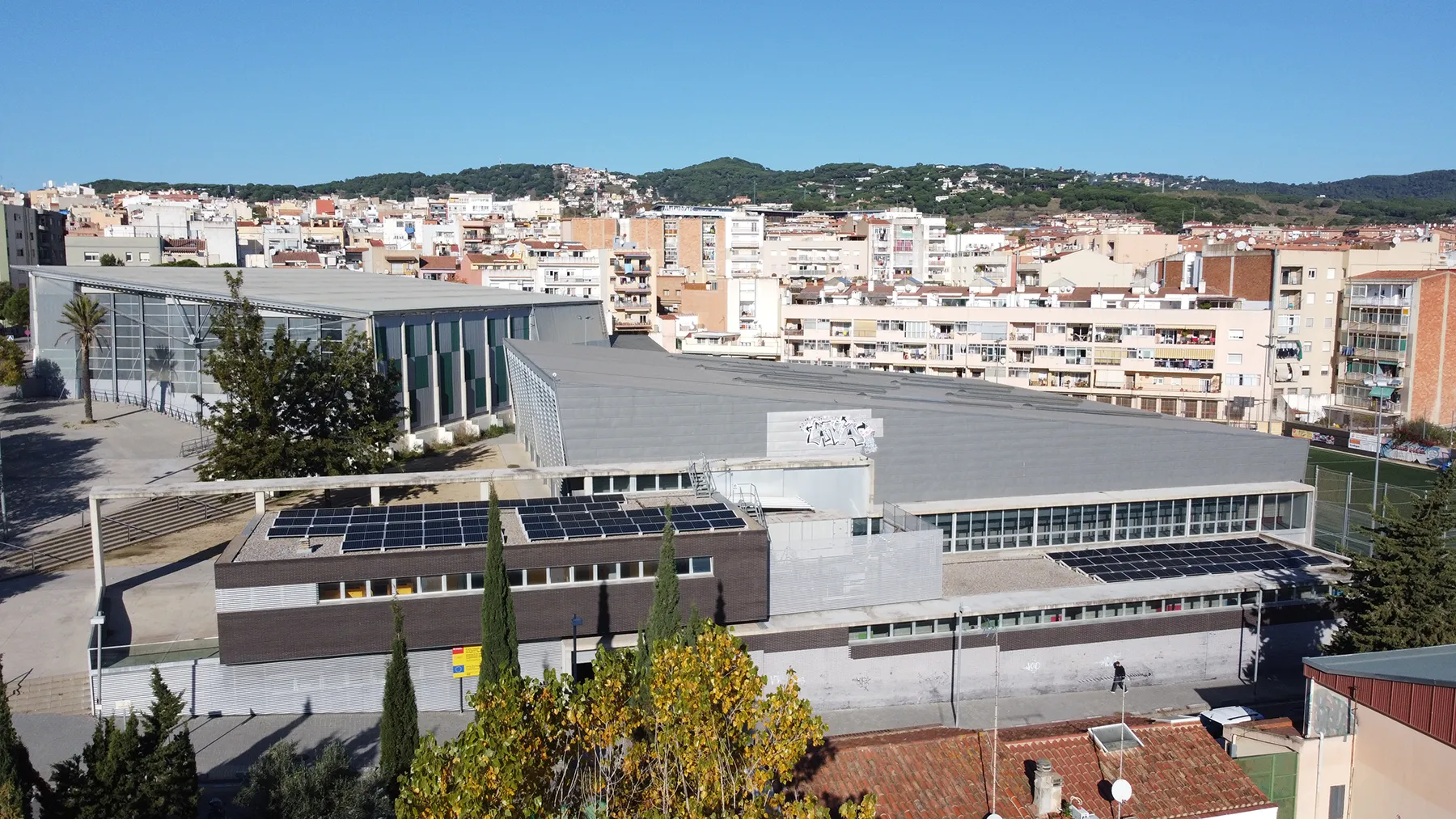
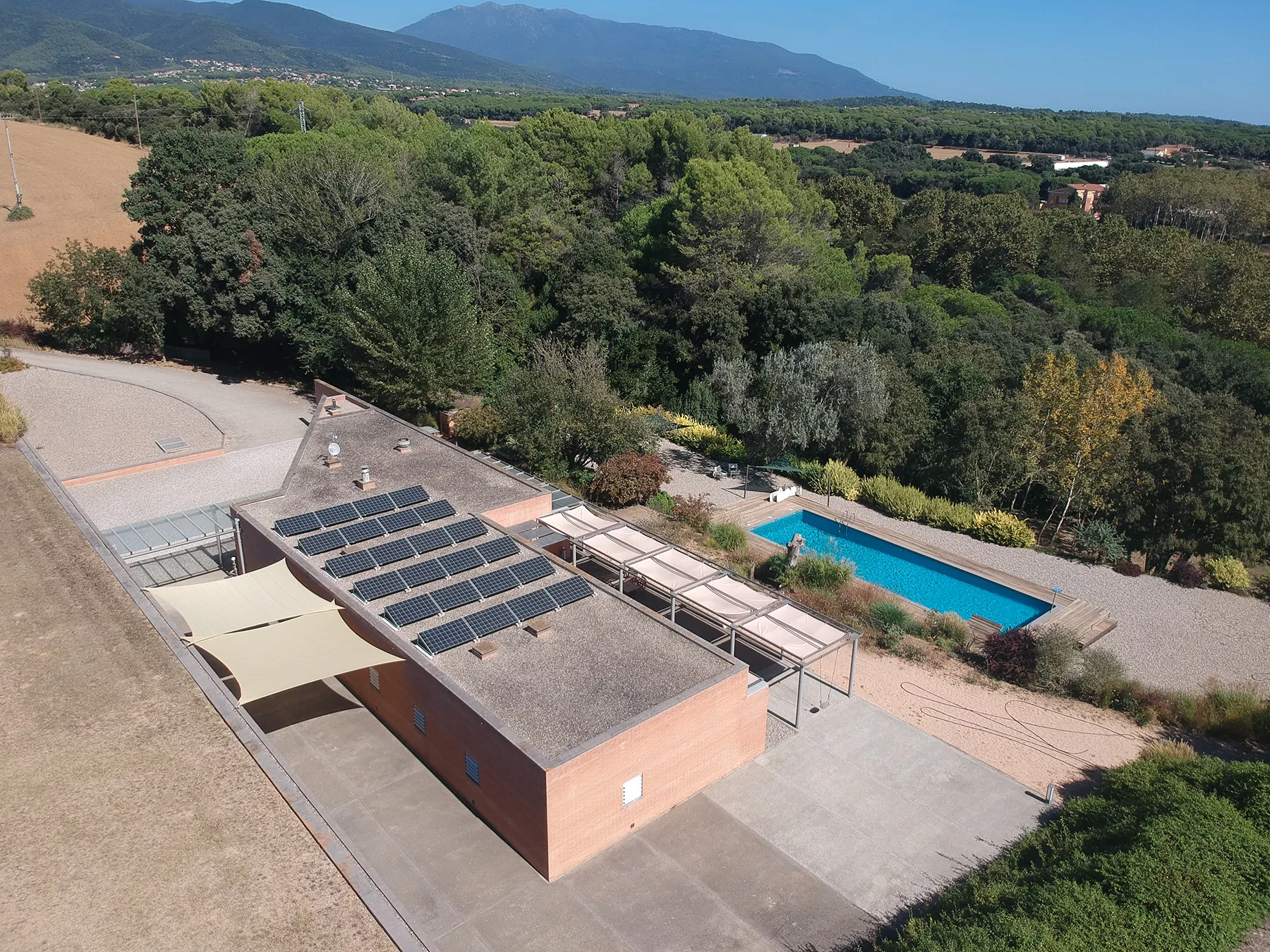
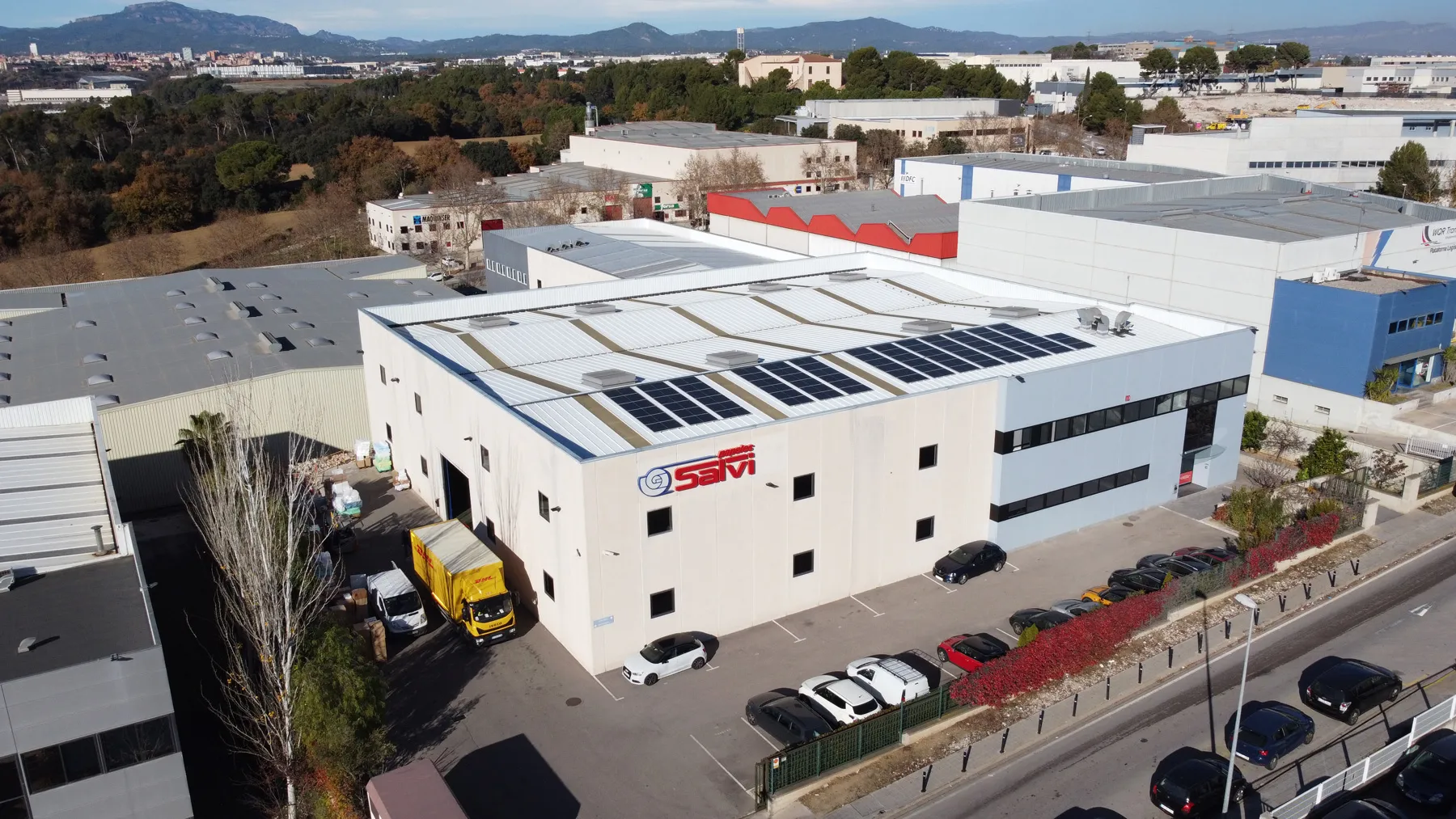
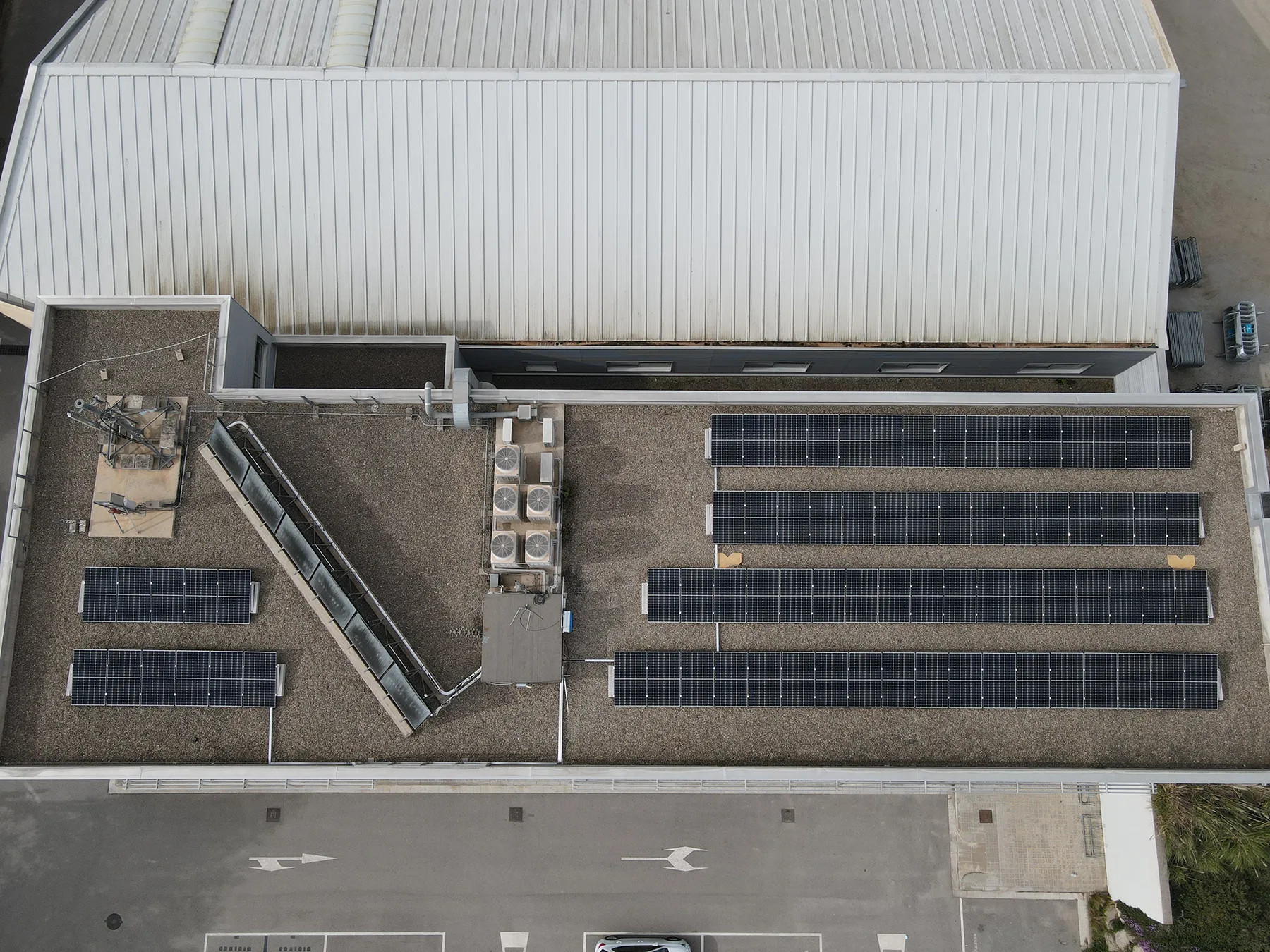
Real cases of more than 2,000 solar installations completed in Catalonia and the Balearic Islands for homes, communities and businesses. Discover in each project the installed power, the type of installation, the complementary solutions (heat pump, battery, chargers) and the technical particularities of each case.
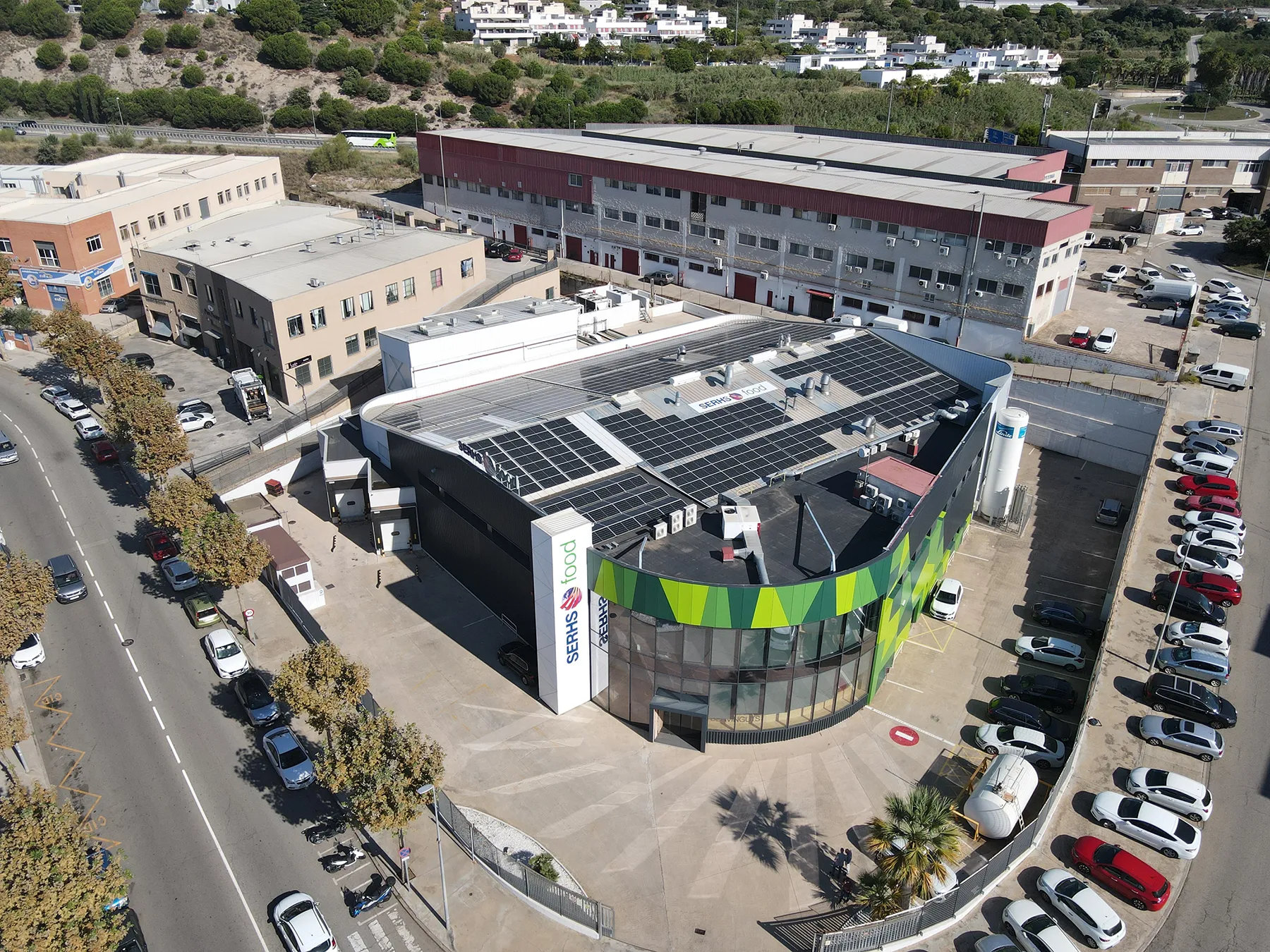
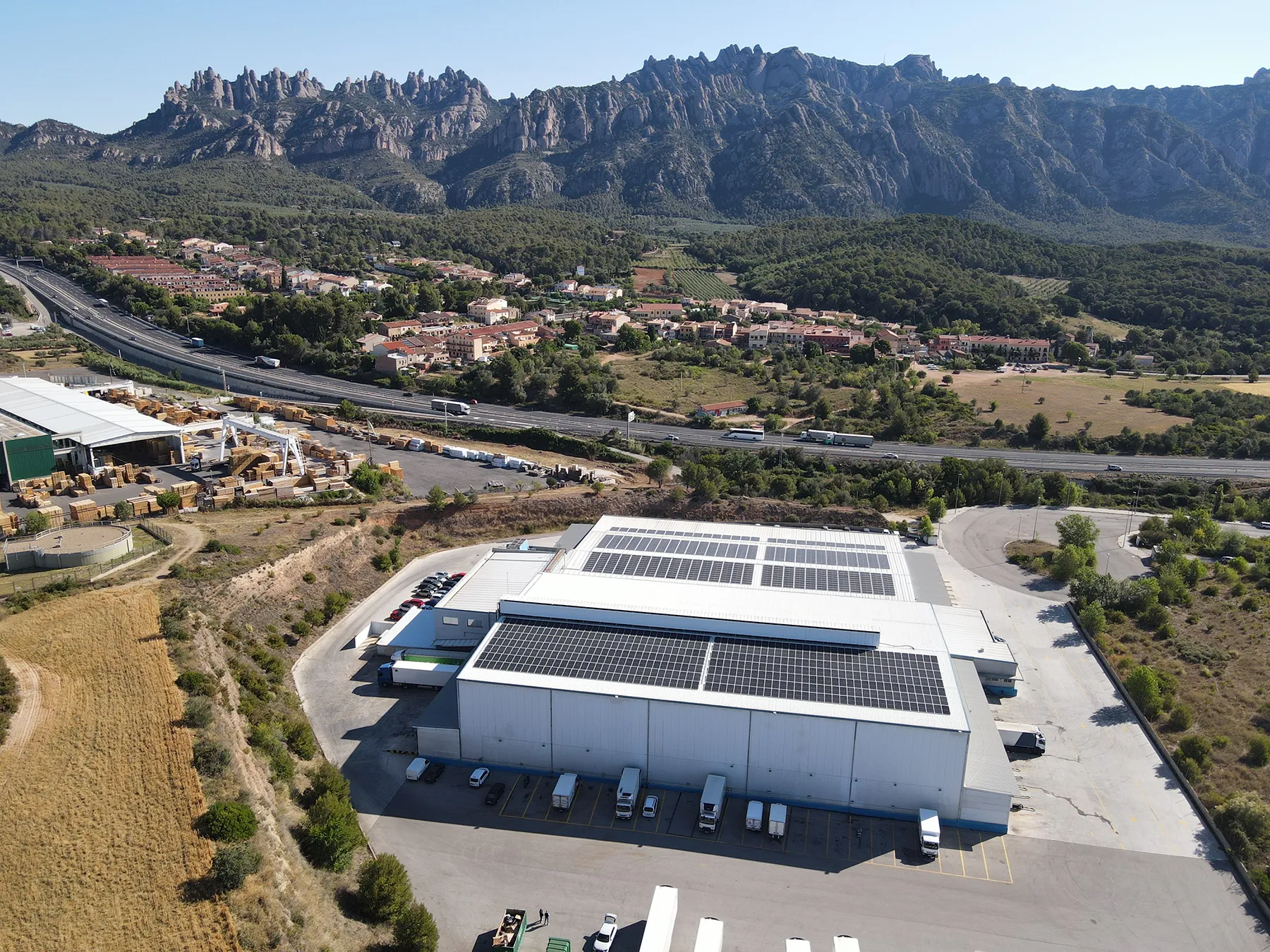
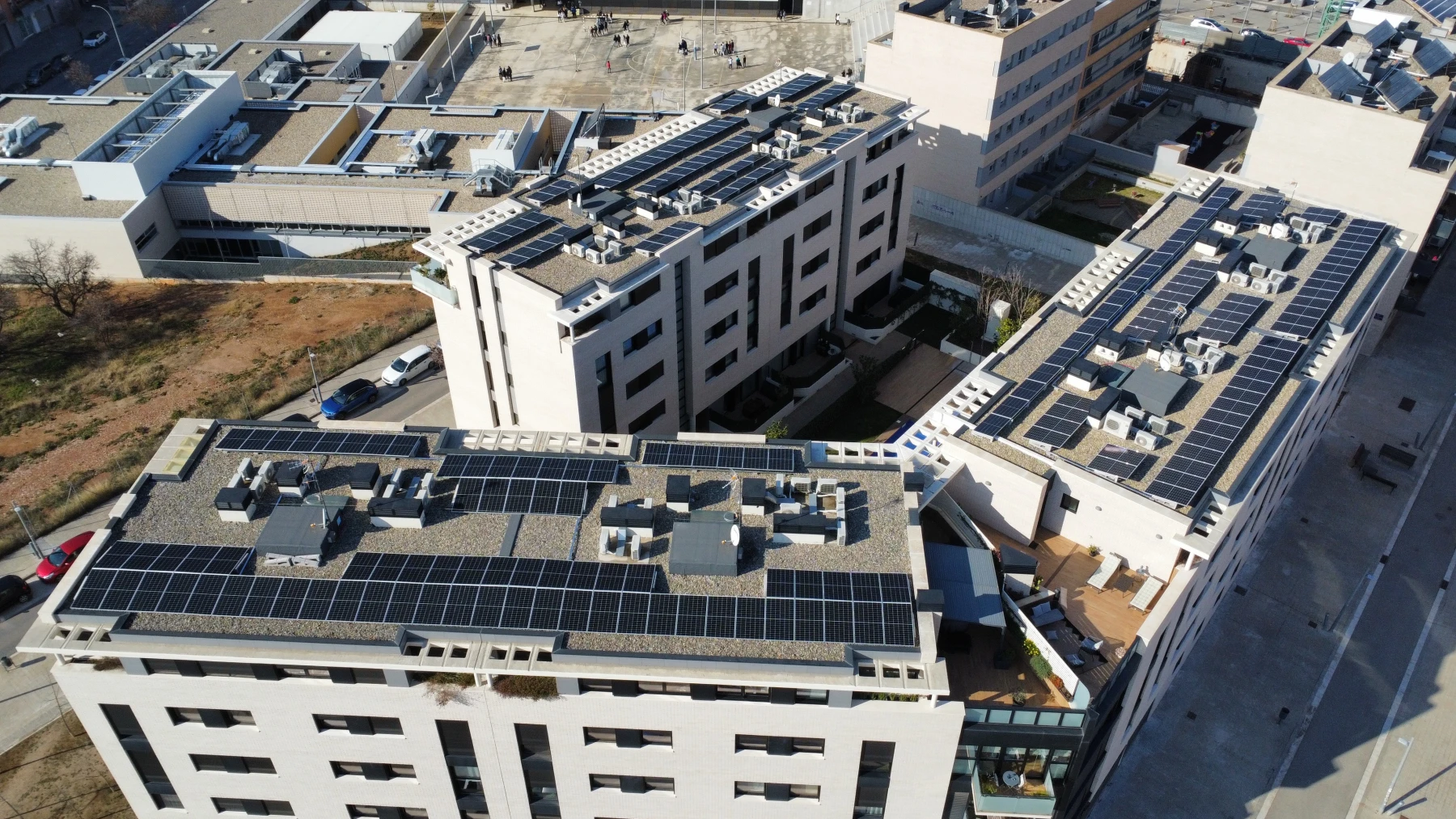
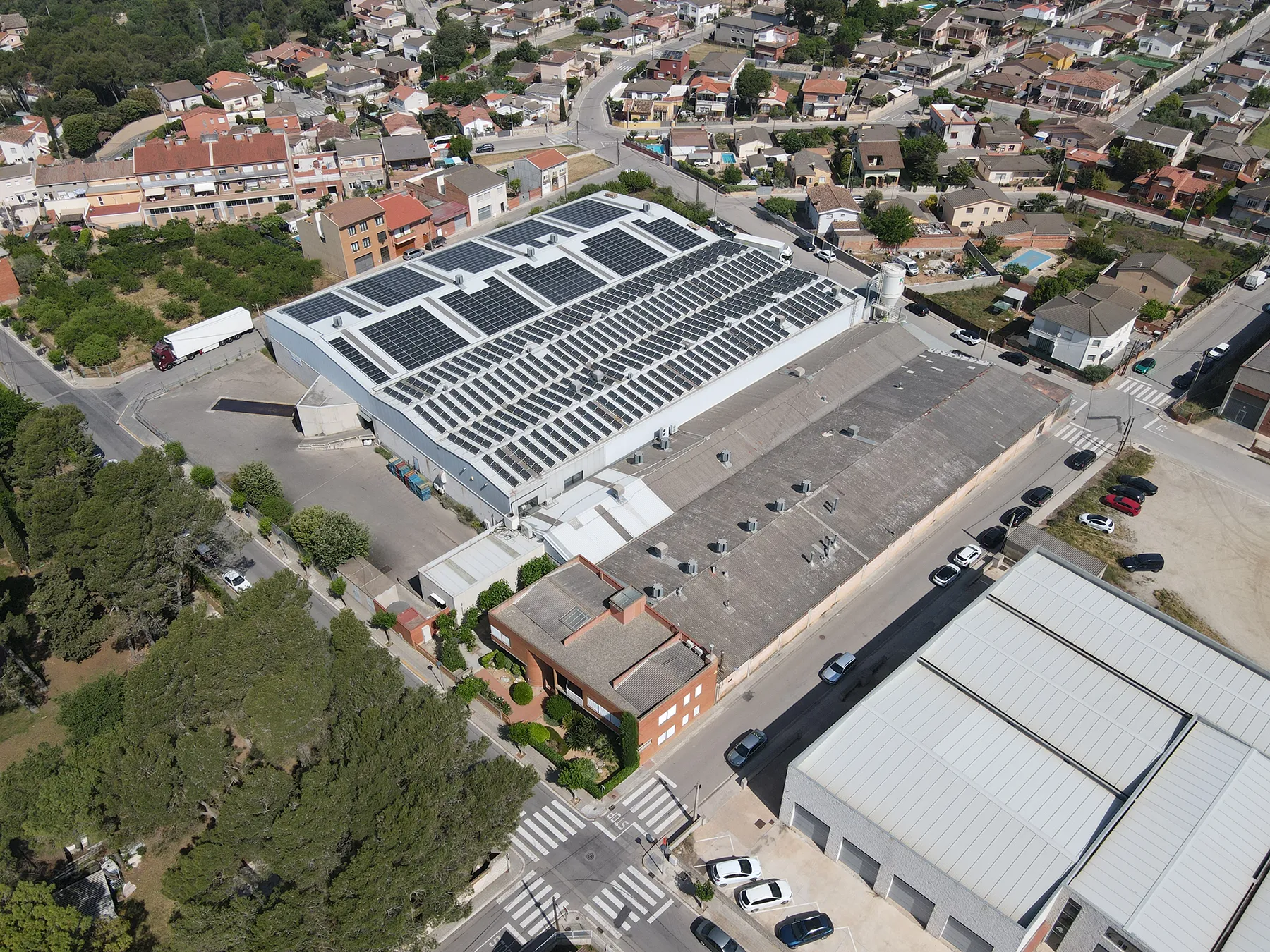
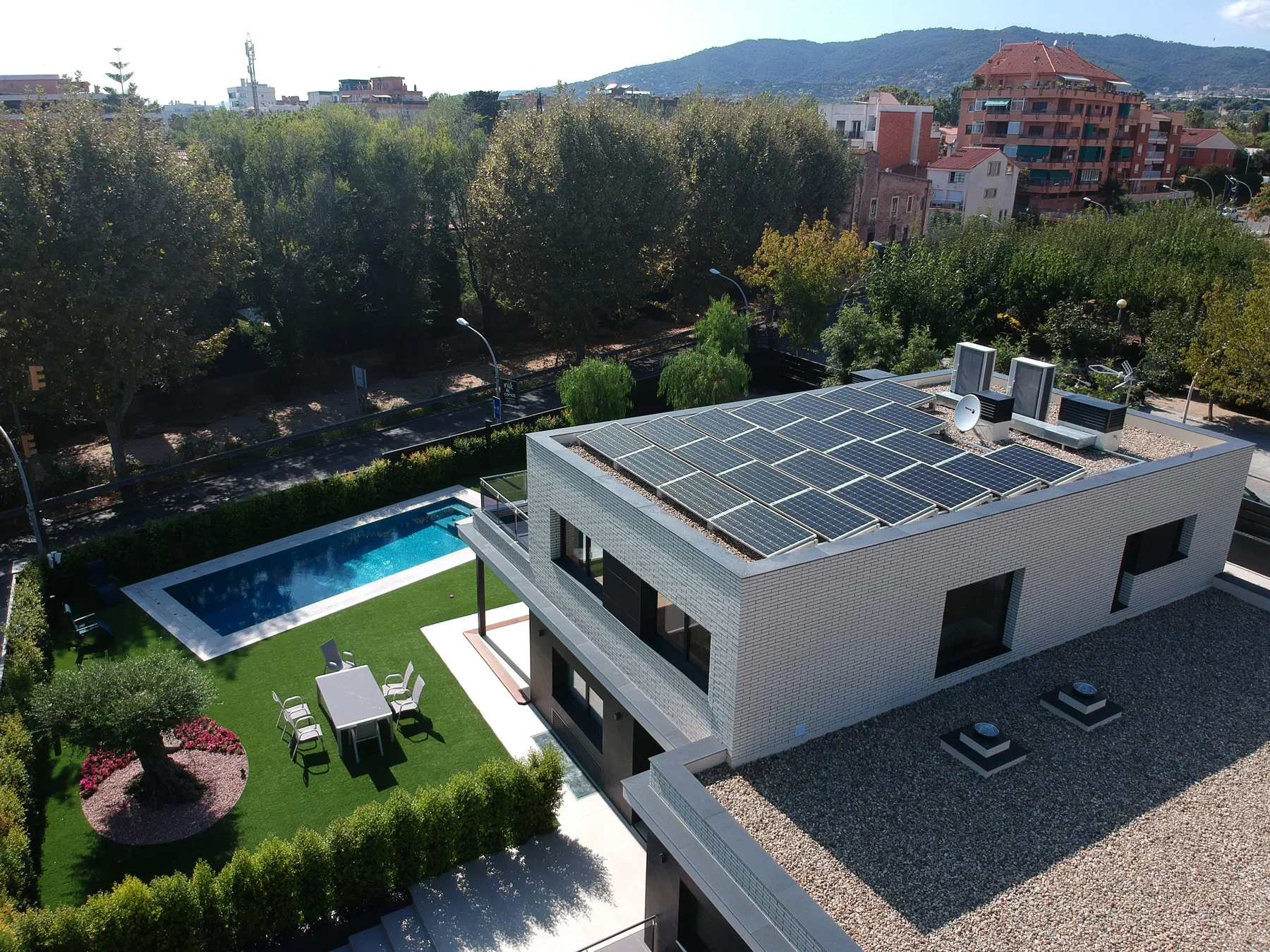
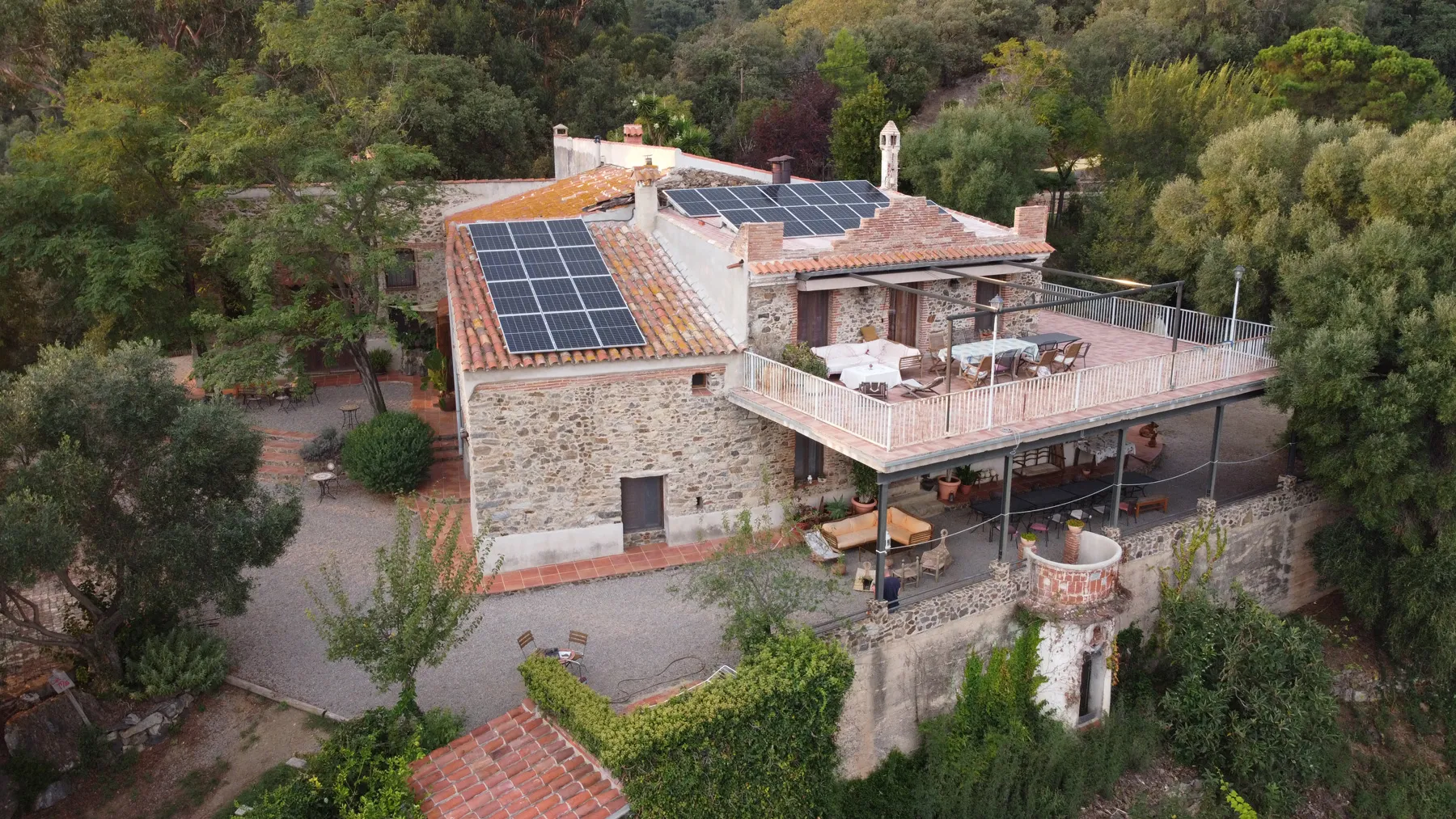
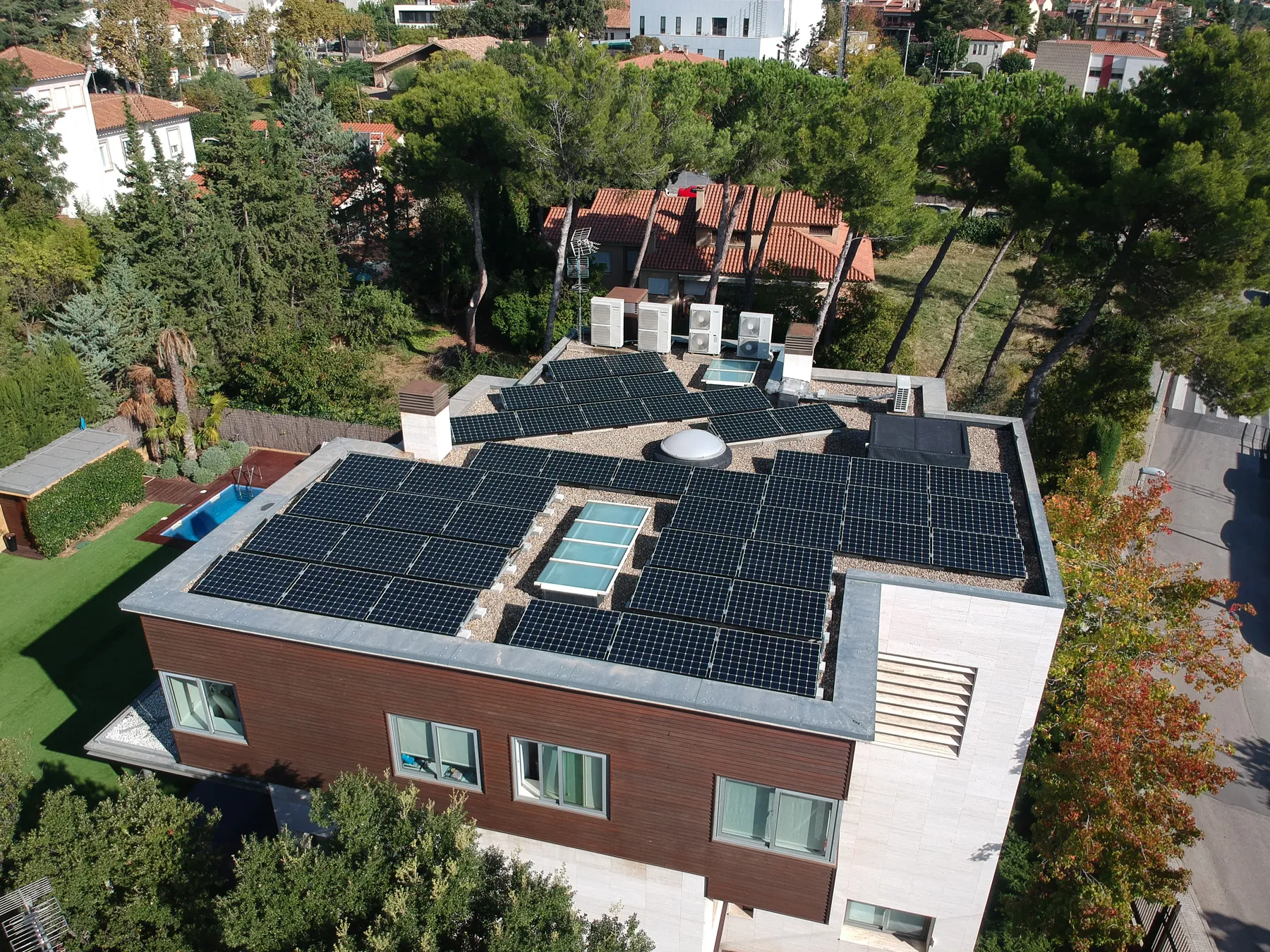
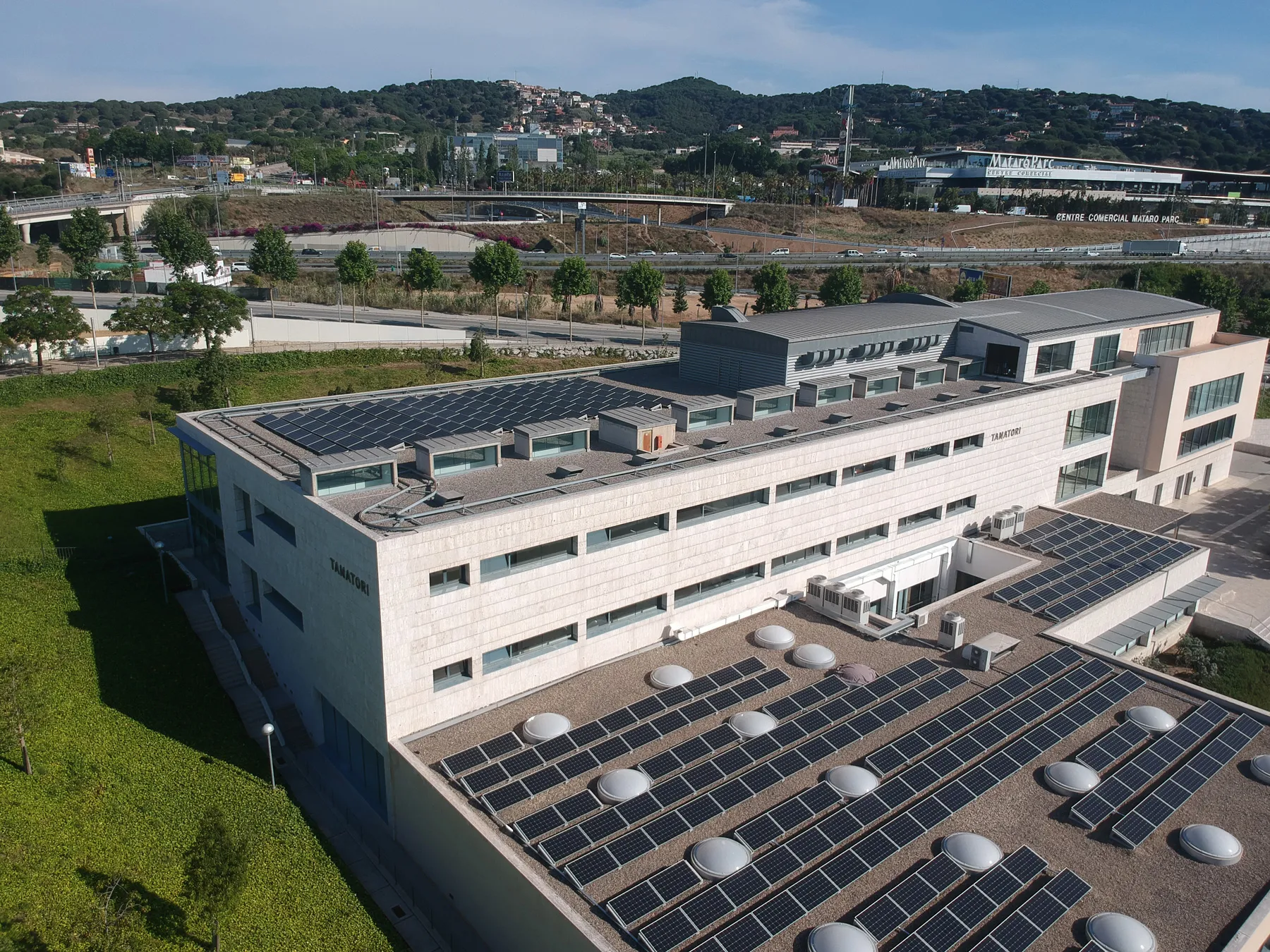
Drastically reduce the cost of your installation by combining the current grants available in Catalonia and the Balearic Islands. At SolarTradex we take care of the study, paperwork and complete management so you get the maximum tax benefit available.
- Personal income tax deduction up to 60% (RDL 7/2026): the new Royal Decree-Law extends deductions for homes: up to 20% for renewable self-consumption and up to 60% for energy renovation (combining photovoltaic + heat pump).
- Municipal IBI and ICIO reductions: most municipalities in Catalonia and the Balearic Islands apply reductions of up to 50% on IBI for 3-5 years and up to 95% on ICIO for projects integrating renewables.
- FACTOR 2026 programme · exclusive to the Balearic Islands: Balearic regional call with specific grants for photovoltaic, heat pumps, batteries and charging points.
Why choose SolarTradex
✅ In-house technical team (more than 50 people)
✅ Specialised in-house engineering (50% of the team are engineers/economists)
✅ Experience in the solar sector since 2010
✅ Full project management: no subcontracting, no intermediaries
✅ Regular trainers at the Association of Industrial Engineers of Barcelona and Lleida

Frequently asked questions about solar panels

What is self-consumption and how does it work?

It is the ability of one or more consumers to generate, manage and consume energy in the same location or remotely, whether with or without energy accumulation. Each kWh produced and self-consumed is 1 kWh less that we must buy from the electricity company with its corresponding savings on the electricity bill.
Solar panels generate direct current that is received by the inverter, which transforms it into the alternating current that we consume at home.
We inject the generated solar energy (in most cases) directly into the main electrical panel of the house, so that if at a given time we are generating 3 kWh and consume 4 kWh, then the first 3 kWh of consumption will come from the solar panels we will buy the kWh that remains to complete consumption from the electricity company.
And also the other way around, if at a given hour we are generating 3 kWh, and we are only consuming 2 kWh, then the entire consumption will come from the solar panels and the excess solar kWh will be sent to the grid.
For this kWh that we send to the grid, the electricity company will apply a discount to our electricity bill (compensation).
What are virtual batteries? How do they work?
Virtual batteries are a mechanism whereby the electricity retailer manages the solar surpluses you send to the grid and applies an economic compensation on your subsequent bills, sometimes allowing you to assign the surplus to different supply points.
At first they seem an attractive idea, since they allow you to take advantage of surplus kWh without investing in a physical battery.
However, today most retailers have introduced significant limits: compensated amounts cannot exceed the cost of the energy billed (there is never a credit balance in cash), and the price at which they value the surplus is progressively decreasing due to solar oversupply during daytime hours (the "duck curve" phenomenon).
In addition, the current framework (RDL 7/2026) and the active grants and subsidies (IRPF, CAE, FACTOR 2026 in the Balearic Islands) are especially boosting systems with physical batteries, which provide real autonomy and maximum valorisation of the surpluses.
Therefore, virtual batteries are a useful short-term solution, but in the medium-long term, the future of energy storage will lie with physical batteries.
Are there alternatives to installing batteries if I don't want to spend so much money?
There are other storage systems to store surpluses. We have surplus diverters, which when they detect that solar generation is lower than consumption, they divert the surplus to an electrical resistance located inside a hot water tank, so that the water is preheated coming from the street before reaching the boiler/water heater and thus the thermal jump necessary to heat it is reduced.
Batteries store energy in the form of chemical energy and DHW accumulators in the form of thermal energy.
Another solution for those who have an electric car and a possible charging point is to install an electric vehicle charger (EVC) that allows them to take advantage of solar surpluses.
What is more important in a solar panel: power or efficiency?
In photovoltaics, as in real life, size is not the most important thing…
What really makes a difference is efficiency, which is the ratio between the panel's power output and its surface area (W/m²). A panel with higher power output and larger size can be less efficient than a smaller one if its W/m² ratio is higher.
The more efficient the panel, the more kWp you can install in a given surface area — something especially important on roofs with limited space.
The panels we work with at SolarTradex are positioned in the high-efficiency segment of the market, which ensures making the most of every square meter of your roof.
And if you are looking for the maximum efficiency available, there are premium solutions such as SunPower Performance panels, with efficiency above 22.5% and a triple 30-year warranty (product, power output and service).
Do microinverters produce more energy than traditional inverters?
Installing microinverters can be a very good option if you have significant shading on your installation.
Working with microinverters means that shadows on some panels do not affect the rest; however, if you do not have shading, you will pay a premium for the installation and it will perform just as well as without microinverters.
If you install microinverters and one of them fails, you will not lose all of the production as would happen if you worked with a single central inverter; but, on the other hand, you will have a much higher chance of a microinverter failure than if you worked with a single central inverter.
Furthermore, if a microinverter fails, you will need to climb onto the roof to repair it and dismantle the corresponding panel, so the repair or replacement cost will be much higher.
An alternative to microinverters for managing shading are SunPower Performance panels, which use cells cut to a third and parallel circuits to minimise the impact of shading without the need to install microinverters.
Does it make sense to install a larger inverter in case I want to expand my installation in the future?
It makes sense if you're clear you'll consume more in the future, but we should remember that adding 4 more panels later will always cost significantly more than installing them now.
Bear in mind that home electrification (aerothermia, electric car, induction cooking, swimming pool) will increase your electricity consumption in the coming years, so sizing the inverter properly from the start is a profitable long-term decision.
If you are planning any of these changes, it's important to tell us your forecast before sizing the installation. You can request your solar panel quote and we will prepare a proposal that takes into account your current and future consumption.
Can we place modules facing north?
Facing modules to the north will always be the last option, but if it is not possible to face them south because we do not have space, or because we need more power to cover consumption and we do not have east-west options either, then we will face the panels north without any problem.
It should be noted that panels facing north in Catalonia produce approximately 10% less than modules facing south in Germany.
In any case, at SolarTradex we design every residential installation making the most of the orientation and surface available on your roof.
On an east-west sloped roof, is it a good option to raise the panels so that they face south and produce more?
At SolarTradex it is a very bad option, for the following reasons:
Aesthetics. We need to make PV sexy, and seeing a house with raised panels on a sloping tile roof is just the opposite. There are aesthetically refined options such as SunPower Performance panels with a full-black finish.
It is dangerous: we are experiencing more and more extreme weather conditions, and placing elevated panels on a sloping roof only increases the wind load and plays with fire, so that the installation flies away on the day you least expect it.
The Urban Planning Law does not allow it, since the urban planning of the municipality where they are installed would have to be modified. Installation on the roof of buildings and other auxiliary constructions, including car park pergolas, is only permitted when the installations do not exceed one meter in height from the flat roof or, in the case of a sloping roof, when the collectors or panels are located attached in parallel.
If we want to maximise solar generation, today it is much more profitable and safe to install a couple more solar panels in a coplanar arrangement facing east or west, since the price of solar panels has dropped very significantly and the cost of the structure will also be cheaper.
How does shading from an antenna or railing affect my installation?
Permanent shading, even if it only affects part of a panel, has a fairly significant impact on the production of the solar array.
Solar panels are connected in strings, in the same way that within a single panel the different solar cells are also connected in 3 or 4 strings that join at the top of the panel (currently some panels have the connection point in the central part).
These strings can be imagined as pipes through which water flows. If a shadow affects only one cell, water will not circulate through any of the cells connected in that string within the panel.
And if that panel has 4 strings, then only 75% of the water will reach the top of the panel, and this panel will only pass 75% of the water to the next panel connected in the string. As a result, only 75% of the water will reach the end of the string — all because of a single shaded cell.
In short, every shadow matters and it is worth minimising them even when they seem small or only affect part of a single panel. There are panels with specific designs that minimise this issue, such as SunPower Performance panels, which use cells cut to a third and parallel circuits to reduce the impact of shading to a minimum.
Do solar panels hold up if you have a hail storm?
This is a very common question asked by anyone considering installing solar panels at home, and the answer is yes, except in exceptional cases. Most photovoltaic panels on the market today are manufactured to comply with a specific standard for high-impact resistance on the glass.
They use tempered glass, thermally processed to achieve greater resistance than conventional glass. They must pass hail impact tests (Hail test) that, according to the IEC 61215 standard, require them to withstand impacts from hailstones of different diameters and at different speeds.
That said, we are increasingly experiencing more extreme weather events, which means it cannot be guaranteed that if hail falls that is larger or faster than usual, the panels will not break. One example was the historic hailstorm on the afternoon of 30 August 2022 in the Baix Empordà (Catalonia), with hailstones of up to 10 cm in diameter.
In this sense, there are premium solutions such as SunPower Performance panels, certified to withstand hail impacts of up to 45 mm in diameter — well above the standard market benchmark of 25 mm.
The most advisable option is to insure the solar installation beyond your home insurance, protecting it against these extreme wind and/or hail events.
In cases of this type of disaster, insurance often will not cover the damage either if the Government declares a catastrophic zone; in that case, the Insurance Compensation Consortium (Consorcio de Compensación de Seguros) will take charge. However, for this to happen, you must have an active insurance policy.
Is it possible to disconnect completely from the electricity grid?
Yes it is possible, but not really wise. If you want to disconnect, you will have to size the installation to guarantee at least 3 days of autonomy, which means making the installation bigger and installing batteries large enough to store energy for 3 days.
In addition, you will need to install a backup generator in case, for example, we go through a week of bad weather in winter without being able to charge the batteries.
Obviously this is much more expensive than setting up a grid-tied self-consumption installation.
In addition, having an off-grid installation means always keeping an eye on consumption and battery charge, which goes against comfort: you can't just come home and switch on the heating or air conditioning whenever you feel like it, or disconnect without a second thought.
What is the useful life of an installation and what guarantees do you offer?
A solar installation currently has a proven lifespan of more than 25 years. Consider that a solar installation has no moving mechanical parts subject to wear, nor circulating fluids that cause overpressure as happens with solar thermal energy. Therefore, if the installation has been well designed, it is very reasonable to expect a useful life of more than 25 years.
Modules gradually degrade over time and lose production capacity; however, manufacturers offer a minimum production warranty of 80% at 25 years — that is, they guarantee that after 25 years, the solar panels will produce at least 80% of what they produced on the first day.
In addition, panels have a product warranty of at least 12 years against manufacturing defects. Premium solutions are also available, such as SunPower Performance panels, which offer a triple 30-year warranty (product, power output and service).
Current inverters have a useful life of more than 15 years, and the inverters we offer come with a 10-year warranty.
Battery: the most common batteries in solar installations are lithium iron phosphate (LiFePO4) and usually have a 10-year warranty and a useful life of more than 6,000 cycles (16 years).
The mounting structures we offer generally have a 10-year warranty.
In addition, as an installation company, we offer a 5-year installation warranty, far beyond the 2 years legally required that most installation companies offer.
How come 10% VAT is applied to my invoice?
The VAT law allows a 10% VAT rate to be applied to renovation and repair works.
A photovoltaic solar installation can be considered a renovation or repair work if, and only if, all of the following conditions are met:
- The recipient of the work is someone who uses the home for private use, or a residential owners' community.
- The recipient cannot act as a business or professional.
- The construction of the home was completed at least two years earlier.
- The cost of the materials purchased by the installer does not exceed 40% of the total cost of the works.
For this reason, we always request a signed statement from our clients in order to apply this 10% rate.
This 10% VAT rate is compatible with other tax advantages and active grants such as the IRPF deductions, the CAE system and other current grant programmes.
Lastly, we can also apply the 10% VAT rate to self-promoters (private individuals who build or renovate their own home).
Complete your energy project